
Collection of ENEA technology and expertise

Two-Phase Cooling Technology: Innovative Solutions for Thermal Management of Power Elctronics
Two-phase cooling is an advanced thermal management technology that leverages the latent heat of evaporation and condensation of a working fluid to achieve highly efficient heat transfer. It is ideal for applications requiring the dissipation of high heat fluxes, such as aerospace electronics, industrial devices, HPC data centers, electric vehicles, and power converters for hydrogen production. Its compact design, energy efficiency, and ability to maintain optimal operating temperatures make it a cutting-edge solution for high-performance and reliability-focused systems.

Application sectors
Problem to solve
The "two-phase cooling" technology aims to address the issue of heat dissipation in high-energy-density devices, ensuring thermal efficiency and reliability. It meets the need to manage high thermal flows in advanced electronic applications, data centers, aerospace systems, and industrial equipment. Potential users include technology companies, research centers, IT infrastructure operators, and sectors such as aerospace and automotive.
Description
The two-phase cooling innovation effectively addresses the growing need to manage high thermal fluxes in high-power-density systems. By leveraging the latent heat of evaporation and condensation, this technology ensures highly efficient heat transfer compared to traditional methods. It is designed to optimally dissipate heat in complex applications such as aerospace electronics, HPC data centers, electric vehicles, and power converters for hydrogen production. The solution stands out for its compact design, energy efficiency, and ability to maintain stable operating temperatures, enhancing the performance, reliability, and sustainability of the systems involved.
Innovative aspects and advantages
- Application versatility, safety, and maintenance-free operation
- Compactness and lightness
- Extreme heat fluxes management
- Reduction in energy and water consumption
- Superior thermal exchange efficiency
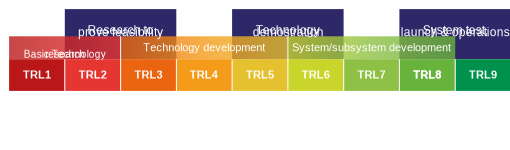
Technological Maturity 8
Strengths
- Cost
- Social/economic relevance
- Legal/regulatory content
Admissible applications
- Heat dissipation in advanced electronic devices for industrial applications
- Thermal management for electric and hybrid vehicles (batteries, IGBTs and autonomous driving control systems)
- Thermal management of onboard electronics for aerospace applications
- Thermal management of power converters for electrolyzer power supply (hydrogen production)
- Thermal management of workstations, server and HPC data centers
Research group involved
Revision date
06-11-2026
Didn't find what you were looking for or would like more information ?