
Collection of ENEA technology and expertise

TRIO (Tool for Recharge Infrastructure Optimisation) simulation module for charging behaviour and estimation of urban energy demand from electric mobility
TRIO is a simulation module integrated into the Priority Platform for urban mobility analysis (see related description) and is developed in Python to analyze the effects of the electrification of private mobility. Carried out as part of the 2022-2024 Electricity System Research, it involved the University of Salerno for model development. The system uses as input the Private mobility data (FCD) and information on the infrastructural equipment to simulate charging behavior in case of vehicle electrification. The software then estimates the aggregate energy needs for the different urban areas.

Application sectors
Problem to solve
The growing diffusion of battery electric vehicles requires adequate charging infrastructures and efficient management of energy demand, to ensure the sustainability of the electrification process underway in Europe, aimed at achieving the objectives of energy independence and greenhouse gases emissions reduction. The demand for electric cars recharging in different territorial contexts depends on numerous factors such as anonymous individual mobility patterns, the availability of private charging, the offer of public charging over the territory, characterized in terms of cost and power. The sum of anonymous individual behaviors produces the aggregate demand for charging energy in probabilistic terms. To analytically address the process, it is necessary to have a set of anonymous individual mobility data sufficiently representative of the universe on which to apply appropriate behavioral charging models for realistic supply scenarios.
Description
TRIO is a simulation module integrated into the Priority Platform for urban mobility analysis (see related description) and is developed in Python that relies on a PostgreSQL database, containing input information (real or presumed) on the characteristics of the private electric car fleet circulating in the study area, on the related movements as well as on the structure and infrastructure of the territory. The database also collects the results of the simulations, at micro level (individual charging behaviors) and macro level (aggregated charging behaviors). Individual recharging choices are simulated in probabilistic terms considering the daily travel chains, the required energy consumption, the initial State of Charge of the on-board battery and based on hypotheses of public charging supply in the different urban areas and private charging equipment of electric vehicles. The probability of charging during the different stops is calculated using the results of a large ad hoc survey. Ultimately, the tool reconstructs the hourly charging profiles on the different days of the analysis period, for the different urban areas, aggregating the individual energy requests. Input and output of the code can be viewed in graphical and numerical format. The procedure uses anonymous individual mobility data recorded by the on-board units of private cars so equipped for insurance purposes (Floating Car Data). From this core, with appropriate procedures, the mobility patterns of the entire study electric car fleet are extrapolated. The data on recharge equipment are instead derived from databases made available by various public and private entities or hypothesized for alternative supply scenarios. The innovation of the product lies in the integration of mobility data, territorial and behavioral analysis, offering a flexible solution that can be adapted to different urban contexts and future developments of the electric vehicle fleet.
Innovative aspects and advantages
- Completeness and multidisciplinarity of the analyses
- Output in graphical and numerical format for a easier reading of the results
- Use of standardized data/ease of use
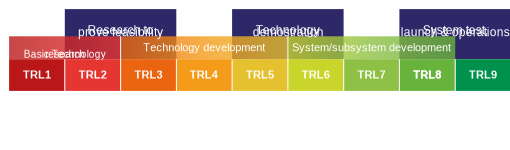
Technological Maturity 4
Strengths
- Cost
- Social/economic relevance
- Legal/regulatory content
Admissible applications
- Provide information to power grid operator on the additional load generated by private and public charging of private electric vehicles
- Provide information to public charging operators on the most convenient location of infrastructures in terms of revenue-cost ratio
- Simulate individual charging behaviours starting from real or extrapolated vehicle mobility data and charging offer scenarios
Research group involved
Patent Available for Licensing
Disponibile per una licenza non esclusiva
Revision date
04-11-2026
Didn't find what you were looking for or would like more information ?