
Collection of ENEA technology and expertise

Thin-film multilayer coatings operating in air at temperatures of up to at least 800 °C to enhance the performance of receivers used in concentrating solar thermal and concentrating solar power systems for heat and electricity generation.
Multilayer thin-film solar selective coating for receivers in concentrating solar systems. It comprises an infrared reflector, absorbing layers, and an antireflection filter. It incorporates protective structures made of metallic and ceramic layers that protect the metallic components against oxidation and enhance thermal stability. Developed to operate in air at temperatures of up to at least 800 °C, it maintains high photothermal performance over time.

Flat sample coated with a solar selective coating designed for high-temperature operation in air
Application sectors
Problem to solve
To make available thin-film multilayer coatings capable of improving the photothermal performance and thermal stability of solar absorbers used in concentrating solar thermal and concentrating solar power systems for heat and electricity generation. In particular, there is a need to develop coatings capable of operating in air at temperatures of up to at least 800 °C, while maintaining high solar absorptance, minimizing thermal radiative losses, and preserving their performance over time.
Description
The technology consists of a multilayer thin-film solar selective coating for receivers in concentrating solar systems for heat and electricity generation. It is developed to operate in air at temperatures of up to at least 800 °C, in non-encapsulated receivers or encapsulated but non-evacuated receivers. The coating comprises an infrared reflector, one or more absorbing layers, and an antireflection filter to maximize solar radiation absorption and limit thermal radiative losses. The innovative feature is a protective structure integrated into the coating, comprising a metallic alloy layer overlaid with a ceramic layer based on substoichiometric oxides. The alloy combines a metal primarily providing optical functionality with an element capable of forming stable oxides. During operation in air, selective oxidation of the latter promotes the formation of a thin oxide layer at the metal/ceramic interface, acting as a barrier to oxygen diffusion and protecting the metallic components against degradation. The protective structure may be repeated as multiple layer pairs and incorporated into different coating configurations. It may serve solely to protect metallic components or contribute to forming the solar absorber through its metallic and ceramic constituents, or the infrared reflector through its metallic constituent alone. The technology can be manufactured using physical vapor deposition (PVD) techniques, particularly magnetron sputtering. It aims to combine high photothermal performance with oxidation resistance, allowing high-temperature solar receivers to operate without maintaining a vacuum environment.
Innovative aspects and advantages
- The metal–ceramic protective structure counteracts oxidation and degradation of the functional materials in the solar selective coating, promoting stability during high-temperature operation in air
- The formation of an interfacial oxide barrier between the metallic and ceramic materials limits diffusion phenomena and helps preserve the physicochemical properties of the protective structure
- The technology enables the development of solar selective coatings designed for operation in air up to at least 800 °C, expanding the potential applications of high-temperature solar receivers
- The versatility of the metal–ceramic structure enables different architectures: a protective layer covering the entire coating or functional layers, such as the infrared reflector or cermet absorber
- Oxidation protection and the possibility of integrating protective materials into functional layers help preserve photothermal performance over time and provide new opportunities for solar receiver design
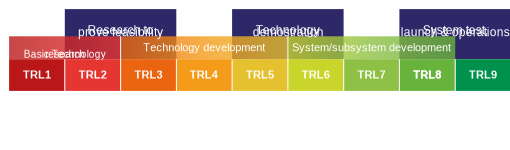
Technological Maturity 4
Strengths
- Cost
- Social/economic relevance
- Legal/regulatory content
- Efficiency/productivity/performance
Admissible applications
- Solar receivers for concentrating solar power (CSP) plants for electricity generation.
- Receivers for concentrating solar thermal (CST) systems for high-temperature heat production.
- Receivers for central-tower solar power plants.
- Concentrating solar systems for industrial process heat production.
- High-temperature solar receivers integrated with thermal energy storage systems.
Research group involved
Patent Available for Licensing
Disponibile per una licenza esclusiva
Revision date
23-11-2026
Didn't find what you were looking for or would like more information ?