
Collection of ENEA technology and expertise

SPHINGObacterium for biological managment of soil contaminants
The solution uses a natural microorganism, already validated by ENEA studies for the degradation of polypropylene, integrated into a scalable process to produce biomass. This biomass is used to functionalize agricultural biochar, combining the benefits of a soil improver with a biological anti-plastic action. This innovation offers a sustainable response to soil microplastic pollution, improving soil health, ecosystem quality, and reducing plastic accumulation. Thus, it transforms an environmental problem into a useful resource for sustainable agriculture.
Application sectors
Problem to solve
This innovation addresses the need for sustainable and scalable solutions to address plastic pollution in agri-environmental systems, benefiting the environment and health by reducing pollution, improving ecosystem quality, and transforming an environmental problem into a functional resource for agriculture.
Description
The proposed solution uses a naturally occurring microorganism, already demonstrated (ENEA studies) to degrade polypropylene, integrated into a scalable process to produce biomass. This biomass is then used to functionalize biochar for agriculture, combining the benefits of a soil improver with a biological function active against plastics, improving soil health and reducing the accumulation of microplastics. This innovation addresses the need for sustainable and scalable solutions to address plastic pollution in agri-environmental systems, with benefits for the environment and health, contributing to pollution reduction, improving ecosystem quality, and transforming an environmental problem into a functional resource for agriculture. The technology is applicable to the pilot and industrial-scale production of microbial biomass capable of degrading polypropylene. The biomass is integrated into functionalized biochar to be used as a dual-purpose agricultural improver: improving soil health and reducing microplastics, while maintaining the standard agronomic benefits of biochar. The technology was born from an internal research activity that led to the isolation and functional characterization in silico and in vitro of the bacterium Sphingobacterium multivorum, detecting its ability to degrade polypropylene by up to 50% after 45 days and up to 98% when immobilized in biochar after 45 days.
Innovative aspects and advantages
- Ecological restoration of plastic-contaminated ecosystems
- Integration into circular economy processes
- Natural and sustainable biodegradation
- Reduction of pollution and recalcitrant plastic waste
- Scalability of the technology
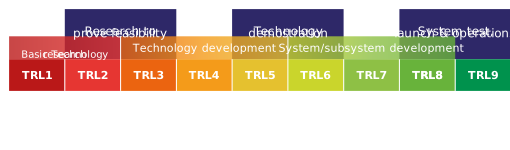
Technological Maturity 4-5
Strengths
- Cost
- Social/economic relevance
- Legal/regulatory content
Admissible applications
- biomass is integrated into functionalized biochar
- microbial biomass capable of degrading polypropylene
Research group involved
Patent Available for Licensing
Non disponibile per una licenza
Revision date
22-05-2026
Didn't find what you were looking for or would like more information ?