
Collection of ENEA technology and expertise

PRIORITY: Digital Platform for the analysis and the management of urban mobility
PRIORITY is a digital platform for strategic planning of urban mobility taking into consideration sustainability and decarbonization. The platform integrates big data and open data into a shared geo-data base with the use of advanced models to analyze the interactions between home locations, transport systems, mobility choices and environmental impacts. The solution consists of a back-end for data management and for user elaborations, while a front-end allows intuitive and accessible interaction from the user side.

Application sectors
Problem to solve
The implementation of urban policies for sustainability and decarbonization are strictly related to the knowledge of vehicle usage profiles and real mobility needs of people. This knowledge is often incomplete and inadequate for a correct planning of structural interventions in urban areas. Indeed, the current analytical instruments for urban mobility analysis are also not suitable in the monitoring phase and in the ex-post evaluation of the achieved results. Therefore, PRIORITY innovates the knowledge and evaluation processes of urban mobility offering a relevant instrument useful to mobility managers. The platform supports the identification, and the management of caveats and economic losses related to urban mobility. In addition, the platform allows the promotion of policies and intervention in favor of more accessible and sustainable transport systems at low environmental impact.
Description
PRIORITY is an innovative digital platform designed to support analytical and planning processes to promote sustainable urban mobility at low environmental impact. PRIORITY uses new model approaches built with big mobility data and open data from public transport services to analyze the interactions between home locations, transport systems, mobility choices and environmental impacts. The architecture of the platform is structured in two components: the Client and the Server. The Client mainly includes the back-end that is dedicated to managing and elaborate data. This has been developed as a conventional web-application, accessible through a browser and integrating a system for the visualization of interactive maps. These maps allow the user to execute spatial and temporal analysis with the estimation and visualization of specific traffic indicators and with the option to configure input parameters before executing specific tasks. Additionally, this system allows an efficient and customable management of the analysis.
Innovative aspects and advantages
- Extended use of Big Data and Open Data: it integrates data from sensors, mobile devices and datasets from publics transport by offering punctual analysis updated with mobility and offers profiles compared to the traditional systems.
- Focus on energy and environmental impacts: it evaluates the polluting and GHGs emissions as well as the energy consumptions, allowing the design of low environmental impact solutions.
- Informed decision and Based on Data: it improves the capability of urban planners and of public administrations to take informed decisions through the access to updated data and simulated predictions.
- Integrated Approach: it gathers and integrates mobility big data, open data of public transport services, and modelled results by removing data fragmentation that currently exists in traditional solutions.
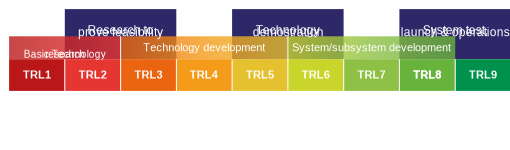
Technological Maturity 5-6
Strengths
- Cost
- Social/economic relevance
- Legal/regulatory content
Admissible applications
- Analysis and characterization of the mobility demand and transport offer with the use of travel big data and transportation open data
- Digital twin for the analysis and data-driven identification of mobility behaviors and for planning new mobility scenarios
- Evaluation of energy consumption, polluting and GHGs emissions from well to tank due to urban transportation. Economic estimation of urban mobility externalities;
Research group involved
Revision date
26-11-2026
Didn't find what you were looking for or would like more information ?