
Collection of ENEA technology and expertise

Infrastructure for the identification and characterisation of microorganisms isolated from agri-food and environmental samples for biotechnological applications
The technology offers the possibility of using an integrated approach to identify strains isolated from different matrices for potential biotechnological use. This series of different tests (MALDI-TOF, BIOLOG), combined with the Nanopore sequencing system, allows our technology to identify microorganisms that other methods misidentify or fail to identify.

Application sectors
Problem to solve
The technology offers the possibility of identifying with an integrated approach (MALDI-TOF, BIOLOG and NANOPORE) strains isolated from different matrices for their potential use in various biotechnological applications in industrial and environmental processes. The determination of the correct taxonomy and functional profile of microorganisms, as well as the microbiome composition, makes it possible to design microbial consortia and/or use microorganisms in fermentation processes for applications in the agricultural, environmental, pharmaceutical and nutraceutical sectors. The taxonomic assignment and characterisation of individual strains represents the first step for a process scale-up aimed at the production of microbial biomass and/or metabolites, bioactive molecules.
Description
The technology offers the possibility of using an integrated approach based on MALDI-TOF, BIOLOG and MINION to identify strains isolated from different matrices for potential biotechnological use. The platforms allow the phylogenetic differentiation and subtyping of microbial species (bacteria, yeasts, filamentous fungi) isolated from food and environmental matrices. The OXFORD NANOPORE technology allows the sequencing of target genes and the entire microbial genome, thus enabling the analysis of the functional potential of microorganisms. Metabolic and phenotypic characterisation with the BIOLOG system enables the definition of functions related to the metabolism of carbon sources, carboxylic acids, amino acids and peptides. Determining the correct taxonomy and functional profile allows the design of targeted microbial consortia for applications in the agricultural, environmental, pharmaceutical and nutraceutical sectors.
Innovative aspects and advantages
- A wide database of microbial species
- Accuracy
- Rapidity
- Sensitivity
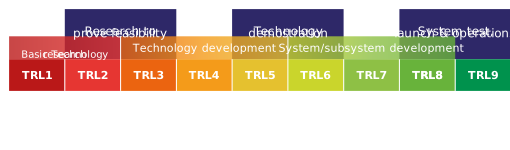
Technological Maturity 4
Strengths
- Cost
- Social/economic relevance
- Legal/regulatory content
Admissible applications
- Bacterial identification
- Characterization of microbial communities
- Fungal identification
- Metabolic and phenotypic profiling
- Yeast identification
Research group involved
Patent Available for Licensing
Non disponibile per una licenza
Revision date
23-06-2025
Didn't find what you were looking for or would like more information ?