
Collection of ENEA technology and expertise

ECOTRIP: Emission and Consumption calculation software based on TRIP data – data measured by vehicle on-board unit and Public Transport open data
The proposed technology is a software developed in Python that relies on a CSV-format database and outputs results in numerical format. It consists of two calculation models, one for private transport and one for public transport, which respectively use FCD and GTFS data to generate the necessary inputs for the main module. This module calculates consumption and emissions based on the average travel speeds for cars and the average routes speed for bus lines.

Application sectors
Problem to solve
To date, the most widely used software for estimating the consumption and emissions of pollutants from private vehicle traffic rely on input data consisting of estimates of hourly traffic flows and travel speeds for individual road segments, derived from traffic models. They can also use, in a highly aggregated manner, estimates of distances travelled on urban and extra-urban roads, obtained through the integration and processing of data and statistics from various sources. Traditional traffic models require knowledge of the Origin/Destination matrices, the acquisition of which is currently particularly costly, as well as the measurement of flows on certain segments for the matrix calibration. As for the planning of Local Public Transport, the use of applications that leverage open data for estimating impacts and studying fleet decarbonization scenarios is not yet widespread.
Description
The technology is based on software ECOTRIP© (copyright registered in 2012), converted to Python language and updated both in the input parameters and in the procedures. It consists of two calculation models, one for private passenger transport and one for the bus lines of public transport. The first is powered by FCD data from probe vehicles, collected by On-Board Units. The second is based on open data from public transport companies in GTFS format and extracts information on the locations and scheduled times of stops for each line, for typical weekdays, pre-holidays, and holidays, referring to the summer period and the rest of the year. Both models include an initial preprocessing module for data cleaning and travel data extraction. The next module in both models assigns the vehicle fleet, defined by fuel type, size, and emission standard (EURO standard). For public transport, the fleet is assigned to the lines. For this last model, there are two additional modules: one for assigning the Load Factor to bus lines by time slot, and another for calculating the gradient of the bus routes. Finally, based on the average speed of the car journey and the bus route, ECOTRIP calculates the consumption and emissions of greenhouse gases during the use phase of the vehicles, as well as for the life cycle phases of the energy carriers, from the extraction of raw materials to the tank. Similarly, it calculates the emissions of the following atmospheric pollutants: nitrogen oxides, non-methane hydrocarbons, exhaust fine particulate matter (PM2.5), and the fraction of PM10 particulate matter emitted by brake, tyre, and road abrasion. ECOTRIP is integrated within the PRIORITY platform, which allows the visualization of output data, including those from ECOTRIP, on interactive maps for performing detailed spatial and temporal analyses, through efficient and customizable management.
Innovative aspects and advantages
- Analysis of electricity consumption required for the planning of charging stations
- Completeness of the analysis: consumption and emissions of greenhouse gases from well-to-wheel
- Use of punctual and georeferenced data in standardized formats, with the potential for wider dissemination
- User-friendly technology
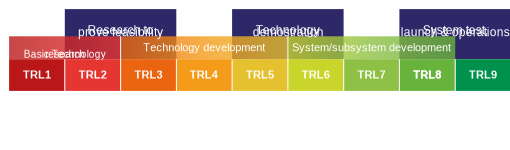
Technological Maturity 4-5
Strengths
- Cost
- Social/economic relevance
- Legal/regulatory content
Admissible applications
- ECOTRIP is a valuable support tool for the drafting of energy audits and the ex-ante and ex-post evaluation of energy and environmental efficiency measures for corporate fleets
- For Local Authorities, road operators and Mobility Agencies: ECOTRIP improves and innovates private traffic management processes in terms of energy efficiency and environmental sustainability
- For Public Transport Companies and Mobility Agencies: ECOTRIP provides punctual and georeferenced estimates on bus consumption and emissions based on GTFS data, with the possibility of evaluating bus fleet renewal scenarios
- for Public Administrations: Ecotrip allows to evaluate decarbonization scenarios for the Transport sector, thanks to the consumption estimation of the full life cycle of energy carriers, from the resource extraction to final use
- for local authorities and stakeholders: the electricity consumption in vehicle fleet electrification scenarios, as calculated by ECOTRIP, is useful for planning charging stations for electric vehicles
Research group involved
Patent Available for Licensing
Non disponibile per una licenza
Revision date
03-11-2026
Didn't find what you were looking for or would like more information ?