
Collection of ENEA technology and expertise

Conversion of carbonaceous mixed wastes in clean fuels
A new process for the treatment and conversion of carbonaceous wastes to “clean” fuel gases such as hydrogen and methane, without emitting polluting gases into the environment. The new process is based on the integration between a hydrogasification reactor and a new generation steam reforming unit driven by renewable energy sources. It allows treatment and energy upgrading of different kind of mixed carbonaceous wastes (e.g. biowastes, plastic wastes, etc.) without emitting into the atmosphere harmful gases (e.g. combustion flue gases, dioxins, fine particulates, etc.).

Application sectors
Problem to solve
A new process for the treatment and conversions of carbonaceous wastes to “clean” fuel gases such as hydrogen and methane, without emitting polluting gases into the environment. The new process is based on the integration between a hydrogasification reactor and a new generation steam reforming unit driven by renewable energy sources. It allows treatment and energy upgrading of different kind of mixed carbonaceous wastes (e.g. biowastes, plastic wastes, etc.) without emitting into the atmosphere harmful gases (e.g. combustion flue gases, dioxins, etc.). The carbonaceous waste is converted to “clean” fuel gases, such as hydrogen and methane, having an energy value higher than any other Refuse Derived Fuel (RDF) obtainable from the same feedstock. Currently, processes recovering energy from wastes have several drawbacks: use of high temperatures (>700°C), which require costly materials, low efficiency, while combustion and partial oxidation lead to polluting gas emissions (e.g. dioxins). Hydrogasification at “low” temperatures (<500°C) mitigates the above issues but requires hydrogen supply to feed the process. The invention overcomes this limitation because hydrogen is internally generated in the developed process.
Description
The process is based on a hydrogasification step combined with a new generation steam reforming unit. The hydrogasification by itself requires hydrogen; in a sustainable process this hydrogen should be produced from renewable sources by water electrolysis, which is costly. In the new process here presented the hydrogen required by the hydrogasification reactor is obtained in the same process loop by steam reforming driven with “emission-free” renewable sources. Thus, no combustion will take place in the process and no external source of hydrogen will be required. Overall, the process allows energy recovery from mixed carbonaceous wastes (e.g. biowastes, plastic wastes, etc.) to flexibly produce hydrogen and/or methane at controlled rates depending on the final users' needs.
Innovative aspects and advantages
- Energy recovery from fuels without combustion and without the emission of flue gas in the environment
- Energy valorisation and utilization of wastes for the storage of renewable energy
- Flexibility in the production of methane and hydrogen with controlled rate
- Production of clean gas fuels (hydrogen and methane)
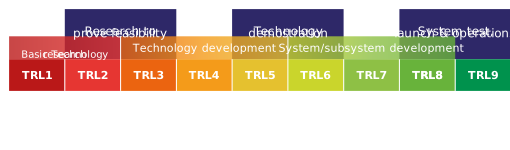
Technological Maturity 3-4
Strengths
- Cost
- Social/economic relevance
- Legal/regulatory content
- Efficiency/productivity/performance
- Innovation
- Lack of technology/solution for the specific task
- Scalability
- Ease of use
- Transferability/mobility
Admissible applications
- Chemical storage of renewable energy
- Hydrogen production and utilization
- Valorisation and volume reduction of non-recyclable mixed wastes
- Waste-to-Fuel processing
Research group involved
Patent Available for Licensing
Disponibile per una licenza non esclusiva
Revision date
06-05-2026
Didn't find what you were looking for or would like more information ?