
Collection of ENEA technology and expertise

BEST - Better Electric Solutions for public Transport Software supporting the electrification of urban Public Transport with battery buses
We propose a software developed in Python, using GTFS (General Transit Feed Specification) data and climatological data as input, aimed at the analysis of public transport on a weekly and seasonal basis. The software includes a Graphic User Interface (GUI) based on PySimpleGUI or, alternatively, on Flask, capable to handle the preprocessing, simulations, and postprocessing of the input data. The interface allows the user to choose the appropriate GTFS input files, to configure the simulation parameters and to visualize results, represented by both data plots (as for instance scatterplots), or

Application sectors
Problem to solve
Companies operating urban public transport must face the energy transition of the sector, which will, within a few years, require the purchase of only zero-emission vehicles at the tailpipe (Reg 2024/1610). In practice, this will steer purchases towards electric buses, powered by hydrogen or batteries. In urban contexts, where the issue of vehicles range is less pressing compared to intercity services, the battery solution is currently competitive in terms of purchase and operating costs. However, it is not suitable for all lines and, in any case, can be implemented either with charging only at depots or with a mixed charging solution at depots and terminals, with high-power installations. The two options involve very different investment and operating costs – as well as operating practices – which deserve to be compared to select the most convenient option in different contexts
Description
We propose a software in Python, carried out within the National Power Grid Research Program; it uses GTFS (General Transit Feed Specification) data for the analysis of the public transport supply on a hourly, daily and seasonal basis and climatological data for the HVAC needs estimation. The software includes a Graphic User Interface based on PySimpleGUI or, alternatively, on Flask, handling the preprocessing of input data, the simulations, and the postprocessing of the results. The interface allows the user to choose the appropriate GTFS input files, to configure the simulation parameters and to visualize results, represented by both plots and tables on georeferenced maps. Results, available at hourly, daily and seasonal levels, are aimed at the optimization of the electric fleet and recharge infrastructures, and are saved in a Postgresql database, available for further analyses. The possibility of using battery buses for public transport is generally addressed through a classic procedure that initially involves collecting data provided by the operating company in various formats and media. This procedure requires adapting the calculation methodology to the format of the available data each time. The main innovation proposed consists of using input data standardized at an international level, through which Local Public Transport Companies describe the service scheduled during different periods of the year. The uniformity of input data allows for the use of a single calculation methodology valid for all application contexts where data in GTFS format is available. The estimation of the energy needs of an urban service, both for traction and HVAC, partly uses results from original ENEA experiments, which are still ongoing to further improve the reliability of the estimates. The BEST module has been integrated into the Priority Platform (see related sheet) that collects the main software procedure developed by the MOST laboratory for the Sustainable Mobility.
Innovative aspects and advantages
- Accuracy of estimation of battery electric urban buses energy consumption
- Complete and multidisciplinary analyses
- Numeric and graphic outputs aimed at an easy interpretation of data
- Use of standard data for any application/simple to apply
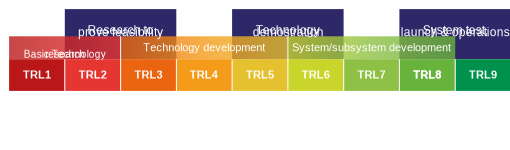
Technological Maturity 4
Strengths
- Cost
- Social/economic relevance
- Legal/regulatory content
Admissible applications
- Indications to local administrations on the reduction of atmospheric emissions generated by urban public buses in case of electrification
- Indications to the electricity grid operator on the additional load generated by the charging – night and daytime – of battery buses for urban public transport
- Support to the urban public transport Companies for the adoption of battery electric buses: technical-economic feasibility and sizing of production factors (on-board batteries and charging devices) necessary for each bus line
Research group involved
Patent Available for Licensing
Disponibile per una licenza non esclusiva
Revision date
19-11-2026
Didn't find what you were looking for or would like more information ?